


- BY Jen
- POSTED IN LinkedIn
- WITH 0 COMMENTS
- PERMALINK
- STANDARD POST TYPE
Are you posting on LinkedIn but struggling to get business on there?
Wondering how often you should post, why your content isn’t getting much reach, or whether you need to upgrade to Premium to get better results?
You’re not alone.
I hear these questions again and again from business owners who want to use LinkedIn to grow their businesses but aren’t sure what they should actually be doing.
Despite the hype online – LinkedIn isn’t just a content platform. It’s fundamentally a social network.
Your profile, network, conversations and follow-up all play a role in helping you become known, build relationships and attract clients.
So, I’ve pulled together 15 of the questions I’m asked most often, along with my take on what really matters if you want LinkedIn to work for your business.
Grab a cuppa, find the questions most relevant to you, and feel free to bookmark this page so you can come back to it.
You’ll also find some extra goodies and useful resources linked throughout the article, so do click through and have a nose! 😊
Contents
- Do I need LinkedIn Premium to get results?
- How do I know who I should actually be connecting with?
- How do I know if my profile is working for me?
- Which content format is best for LinkedIn?
- How often should I post?
- Do I really need to post regularly to get clients?
- Why are my posts getting hardly any reach?
- Do I need to change my content strategy because of the algorithm?
- Will AI-generated content hurt my reach?
- Do I have to share personal stories to get engagement?
- Is commenting the big LinkedIn strategy?
- How do I make the most of existing connections without feeling icky?
- How do I turn connections into clients without being salesy?
- What should I actually be doing on LinkedIn if I only have 30 minutes a day?
- How do I keep track of LinkedIn relationships and turn them into opportunities?
1. Do I need LinkedIn Premium to get results?
A paid LinkedIn subscription can be useful for particular purposes, but it isn’t a magic button that suddenly makes LinkedIn work and brings you endless clients.
If your profile isn’t clear, your network isn’t relevant and you don’t have a strategy for starting conversations, paying for more features won’t fix those things.
Don’t upgrade because you think you need to spend money to be successful on LinkedIn.
Instead, upgrade because there’s a specific feature you need for a specific business reason — and one you’re actually going to use.
My advice? Get the foundations right before paying for extra features.
2. How do I know who I should actually be connecting with?
Your network should be intentional. Don’t just collect connections because LinkedIn tells you that you have 500+ of them.
Think about the people who could help you build your business. That could include:
- Existing clients
- Potential clients
- Suppliers
- People in complementary businesses
- People with access to communities you want to reach
- Collaborators and referrers
- Industry peers
- Journalists and event organisers
If you don’t know who you should be connecting with, it’s worth stepping back and revisiting your business strategy before blaming LinkedIn.
3. How do I know if my profile is working for me?
This is one of the most important questions you can ask yourself.
You can create brilliant content and have an amazing network, but if someone clicks through to your profile and can’t work out:
- What do you do?
- Who do you help?
- What are you known for?
- Why should they care?
…you’ve created a leaky content bucket.
I put as much thought into my LinkedIn profile as I do my website. Do you?
A profile can look polished and still fail to attract the right people if the positioning, messaging or call to action isn’t clear.
4. Which content format is best for LinkedIn?
Different content formats can come and go in popularity. One year it’s polls, the next it’s video, carousels or newsletters.
Instead of wondering which format LinkedIn is rewarding this week, ask yourself:
Does this format help me communicate my expertise and connect with the people I want to reach?
It’s worth experimenting with different formats and approaches, but don’t get caught up in constantly trying to crack the code.
And don’t assume that the format getting the most likes is automatically the best one for your business.
A post that starts a meaningful conversation with a potential client may be far more valuable than one that attracts hundreds of reactions from people who will never need your services.
Choose the format that helps you communicate your message effectively and that you can realistically sustain.
5. How often should I post on LinkedIn?
There’s no magic number or one-size-fits-all answer. It depends on your business goals and what you want to achieve.
Someone who wants to become a thought leader will have a very different approach to someone else who doesn’t want to become a content creator.
Find a rhythm you can sustain alongside running your business. Consistency matters, but that doesn’t mean posting daily.
One great newsletter a month can be far more valuable than 20 generic short-form posts that don’t cut through the noise.
It’s easy to assume that posting more will solve a reach problem. However, if your content isn’t reaching the right people or sparking meaningful conversations, doing more of the same could simply mean spending more time on something that isn’t working.
To make LinkedIn work for you, you need a profile that makes your expertise clear, a repeatable method for growing your network strategically, and a connection strategy that builds genuine relationships and creates opportunities. Content on its own isn’t enough, despite all the influencer hype.
Post consistently, but make sure your content is part of a wider strategy.
6. Do I really need to post regularly to get clients?
No. Content can help demonstrate your expertise, stay top of mind and build credibility.
It’s one part of your LinkedIn strategy, but it’s not the whole strategy.
You can also become visible through:
- Thoughtful comments on relevant posts
- Conversations with potential clients and collaborators
- Connecting with the right people
- Following up and nurturing relationships
- Engaging with the people you want to know better
Don’t spend all your time creating content while neglecting the people you want it to reach.
Business conversations and opportunities happen in LinkedIn’s DMs every day.
7. Why are my posts getting hardly any reach?
This is one of the biggest frustrations I hear.
You spend ages researching, writing and polishing a post, publish it, and then… barely a peep.
It’s easy to conclude that LinkedIn is suppressing your content.
But before you blame the algorithm, step back and look at the bigger picture.
Ask yourself:
- Is this content relevant to the people I want to work with?
- Is it clearly connected to my expertise?
- Does it address something my ideal client cares about?
- Does my profile reinforce the same message?
- Is the opening of my post strong enough to make the right person want to keep reading?
- Does the structure make the value clear quickly?
Your opening, structure and how quickly you get to the point can all affect whether someone keeps reading.
So before you blame the algorithm, look at the bigger picture.
PLUS remember the silent network
There’s a HUGE silent network on LinkedIn, and not everyone who’s interested in you or your work will engage publicly.
Some people will read your posts or look at your profile.
Some will save something and send you a DM three months later.
Some will quietly recommend you to someone else.
Don’t mistake silence for a lack of interest.
Equally don’t confuse high engagement with business results.
A post with hundreds of likes isn’t necessarily more valuable than one that starts a conversation with the right potential client.
The question isn’t just how many people saw your content. It’s whether you’re becoming known by the right people and creating opportunities.
8. Do I need to change my content strategy because of the algorithm?
You don’t need to reinvent your entire strategy every time LinkedIn changes something. But you do need to pay attention to what’s working and be willing to adapt.
I’d start by becoming clearer and more consistent:
- Clear about your expertise.
- Clear about who you help.
- Clear about the topics you want to be known for.
- Consistent in connecting your content back to those things.
And remember that content is only one part of the picture. Your profile, network and conversations all contribute to your overall LinkedIn strategy.
Adapt your approach when there’s a good reason to — not just because everyone else is talking about a new algorithm update.
9. Will AI-generated content hurt my reach?
It can, particularly if your posts are generic and could have been written by anyone in your industry.
You can use AI to help you structure or edit your content, but please don’t outsource your perspective.
Your experience and expertise are your differentiators.
Your opinions, examples and way of thinking are the bits people need to hear from you.
If everyone in your industry is sharing the same stories, using the same content formats and making the same points, it’s harder to stand out.
AI can help you communicate your ideas. It can’t replace the knowledge you’ve spent years building or the relationships you develop by being genuinely interested in other people.
10. Do I have to share personal stories to get engagement?
You don’t have to tell the internet what you had for breakfast, share your deepest personal trauma or turn your LinkedIn profile into a diary.
You can build trust by sharing:
- Frequently asked questions
- Common mistakes you see
- Things you disagree with
- What you wish people knew
- Objections you hear
- Lessons you’ve learned
- Examples of your work
- Your unique perspective
Use stories and examples from your work to build your personal brand.
That’s very different from feeling you have to overshare.
You can be personable without making your private life public.
And you can build a recognisable personal brand by consistently sharing your expertise, opinions and approach to the work you do.
You don’t need to share everything about yourself. You need to help people understand what makes you worth knowing.
11. Is commenting the big LinkedIn strategy?
LinkedIn has seen plenty of engagement tactics over the years, including the familiar “Comment X and I’ll send you this freebie” approach.
The problem is that when a tactic gets overused, it can lose its value.
Getting people to comment on a post doesn’t necessarily mean you’ve built trust, reached potential clients or created a business opportunity.
Meaningful comments on posts from potential clients, existing customers, referrers and people in your industry are different.
You’re contributing something useful to a relevant conversation, showing how you think and giving people a reason to get to know you.
Instead of commenting everywhere just to be visible, focus on conversations that matter to your business.
The aim isn’t to make your posts look popular. It’s to become known by the right people.
12. How do I make the most of existing connections without feeling icky?
You don’t need to suddenly message everyone:
“Hi! Do you know anyone who needs my services?”
Or add your entire LinkedIn network to your CRM or email list without their consent (please don’t do this!).
Start by being curious.
Look at the people already in your network.
- Who do they know?
- What are they working on?
- What conversations are they having?
- Who might be a potential referrer?
- Who might be a useful collaborator?
- Who might simply be someone you’d genuinely like to know better?
Then start conversations like a human being, not like a salesperson with a quota.
Engage with their work. Ask questions. Find out what’s happening in their world. Look for opportunities to help or introduce people who could benefit from knowing one another.
Not every conversation needs to lead to a sale. Sometimes the value of a relationship becomes clear much further down the line.
Please don’t underestimate the people already in your network while constantly chasing new connections.
Your existing connections aren’t just names on a list. They’re relationships worth nurturing.
13. How do I turn connections into clients without being salesy?
A connection becomes valuable when you develop a relationship.
Relationships develop when people get to know you, understand what you do, trust your expertise and have a reason to think of you when an opportunity arises.
That means paying attention to what someone is doing, engaging with their work, asking questions, having conversations and looking for genuine opportunities to help.
And when a conversation naturally reveals a problem you can solve, you can talk about how you might help.
You don’t need to force a sales pitch into every interaction.
Of course, building relationships doesn’t mean waiting passively and hoping someone will eventually buy from you.
You still need to recognise when there’s a genuine opportunity and be confident enough to take the next step.
That might mean suggesting a call, explaining how you work or sharing a relevant resource.
You don’t need to chase people. You do need a strategy for moving the right conversations forward.
14. What should I actually be doing on LinkedIn if I only have 30 minutes a day?
Instead of endless scrolling and thinking:
“I need to go on LinkedIn and see what happens.”
Give your time a job and put LinkedIn in your calendar.
For example:
10 minutes: Find and connect with relevant people.
Research potential clients, collaborators, referrers or other people who matter to your business.
10 minutes: Engage with relevant people and conversations.
Read their posts, leave thoughtful comments and take an interest in what they’re doing.
10 minutes: Follow up and nurture relationships.
Continue conversations, reconnect with people, track opportunities or create useful content.
You can adjust the balance depending on your priorities, the important thing is to be intentional about how you spend your time and track what happens.
Who is viewing your profile? Who is engaging? Which conversations are moving somewhere? Which activities are generating opportunities?
The aim is to spend 30 minutes doing the right things on LinkedIn and ultimately move the right conversations off the platform, whether that’s to a call, Zoom or email.
15. How do I keep track of LinkedIn relationships and turn them into opportunities?
It’s easy to connect with someone on LinkedIn, have a quick conversation and then completely forget to follow up.
Or to spend time engaging with people without keeping track of where those conversations might lead.
If you’re serious about using LinkedIn to grow your business, you need a simple way to keep track of the people you’re connecting with, the conversations you’re having and the opportunities you’re developing.
That doesn’t necessarily mean investing in an expensive CRM.
You could start with a straightforward spreadsheet that records:
- Who you’ve connected with
- When you last spoke
- What you discussed
- The next step or follow-up
- Any potential opportunities
The aim isn’t to turn every relationship into a sales pipeline. It’s to make sure promising conversations don’t get forgotten and that you’re nurturing the relationships that matter.
It’s also worth exploring LinkedIn’s Settings & Privacy options, including the ability to download a copy of your connections and other account information.
Your network is a valuable business asset. Keeping track of it helps you make better use of it.
And if you’re not sure how to put a simple system in place, that’s something I can help you with as a LinkedIn strategist.
The biggest thing holding you back on LinkedIn probably isn’t the algorithm
Nine times out of ten, the thing holding you back on LinkedIn isn’t the algorithm.
It’s a lack of strategy and relying on disconnected, ad hoc tactics.
This is exactly why I created my PACT® Blueprint for experts.
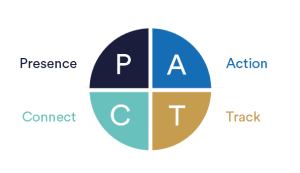
P — Presence
Make sure your profile clearly communicates your expertise and positions you for what you want to be known for.
A — Action
Be intentional about the people you want to connect with and the conversations you want to be part of.
C — Connect
Turn connections into genuine professional relationships that can lead to opportunities.
T — Track
Pay attention to what’s working and stay consistent without allowing LinkedIn to take over your life.
If you’ve been relying on disconnected tactics, it’s time to start using LinkedIn as a business development tool.
A little about me

Hi, I’m Jen — The LinkedIn Lead Jen 😉
I’m an award-winning LinkedIn strategist, mentor and Super Connector, helping experienced experts become known for what they know.
Since 2017, I’ve supported 700+ women to make their expertise more visible on LinkedIn. I help you make what you know easier to find, understand and remember, build relationships with the right people, and create more opportunities.
No awkward outreach. No performative marketing. No becoming a LinkedIn content creator.
Because you’ve already done the hard bit — you’ve spent years becoming brilliant at what you do. Now it’s time for the right people to know it.
Need a hand with your LinkedIn strategy?
Maybe your profile isn’t attracting the right people. Perhaps you’re struggling to grow your network, create content that connects with potential clients, or turn your connections into business opportunities.
Or maybe you’ve tried lots of different things on LinkedIn and need a joined-up strategy that brings everything together.
Whether you need help with one piece of the puzzle or the whole strategy, I can help.
Every business is different, which is why I tailor my approach to you, your expertise and what you’re trying to achieve.
Get in touch at jennifer@mysuperconnector.co.uk and let’s talk about where you’re getting stuck and how I can help.
